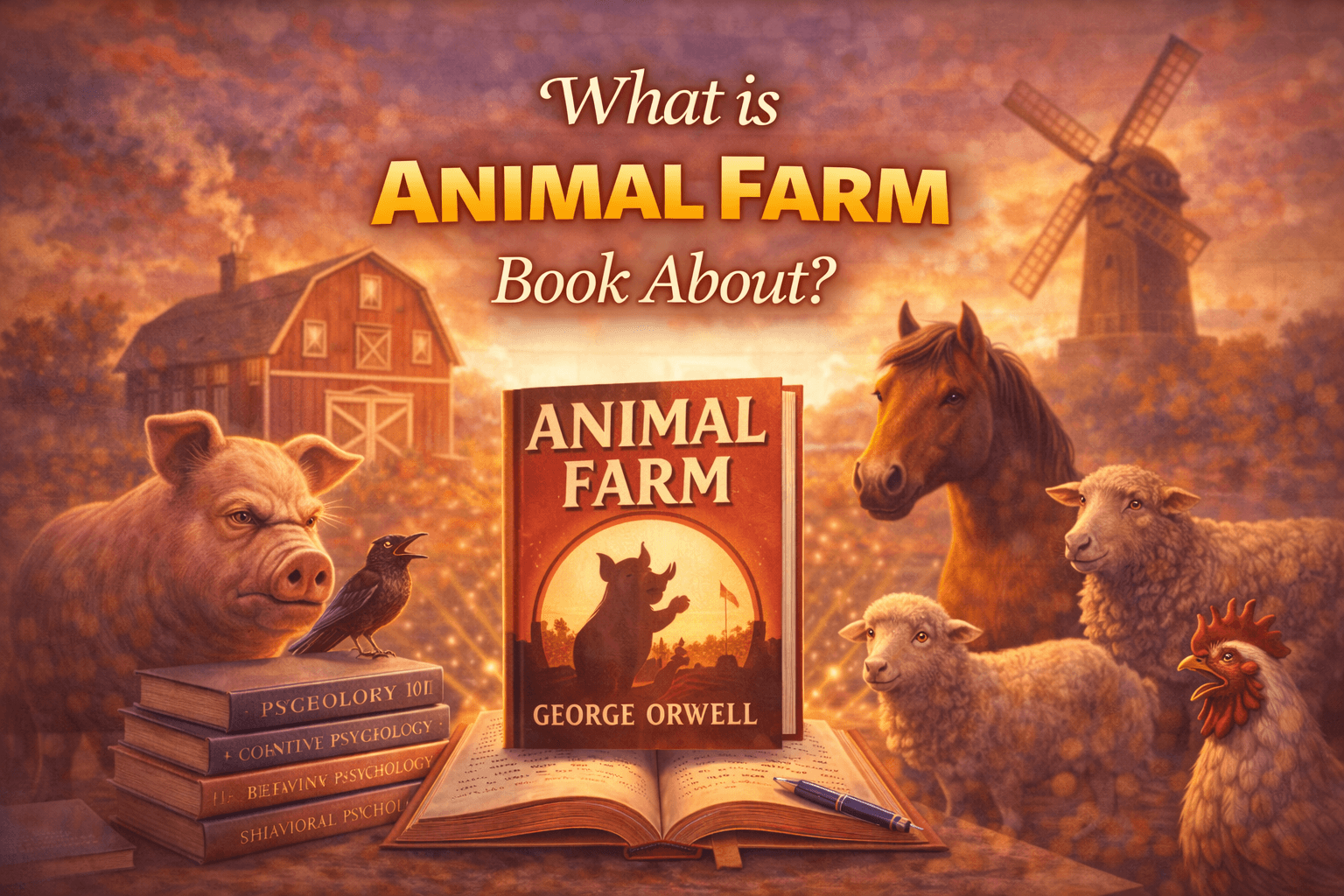
George Orwell, a name that resonates with readers around the world, penned one of his most famous works, "Animal Farm," in 1945. Set against the backdrop of a post-World War II society, this novella serves as a poignant commentary on the dynamics of power, authority, and rebellion. Orwell, a keen observer of political landscapes, crafted this tale during a time when the world was grappling with the aftermath of war and the rise of totalitarian regimes. The timing of its publication made the story especially relevant, as it mirrored the shifts in political thought and governance happening around him.
At its heart, "Animal Farm" is an allegorical tale. On the surface, it narrates the story of farm animals who decide to take control of their lives, seeking freedom from their human oppressor. However, as you delve deeper, you find that each character and event serves as a representation of real historical figures and events, particularly the Russian Revolution and its consequences. This layer of meaning invites readers to explore themes of power, corruption, and betrayal.
Even today, as we navigate our own political and social complexities, questions about leadership and ethics are ever-present. So, what is "Animal Farm" book about? It’s not just a story about animals, it’s a reflection on human nature and the struggles we face in the pursuit of a just society. The lessons woven into its narrative remain strikingly relevant, encouraging us to reflect on our own roles within the systems we inhabit.
The Plot Overview
In "Animal Farm," we witness a group of farm animals come together to overthrow their oppressive human owner, Mr. Jones. Inspired by the vision of equality and freedom, they establish their own set of rules under the banner of Animalism, a philosophy that champions the idea that all animals are equal. The charismatic pigs, particularly Napoleon and Snowball, emerge as the leaders, each with their own vision for the future of the farm.
Initially, the rebellion seems like a triumph of idealism. The animals work together, harvest more than ever before, and enjoy the fruits of their labor. However, as time passes, we begin to see a troubling shift. Napoleon slowly consolidates power, using propaganda and fear to eliminate dissent. The once-shared ideals of the farm erode, and the commandments that govern their lives are subtly altered to justify the pigs' increasing privileges.
For instance, the pivotal moment comes when the original commandment, "All animals are equal," is changed to "All animals are equal, but some animals are more equal than others." This chilling transformation reflects the corrupting nature of power and serves as a profound commentary on how noble intentions can be twisted into tyranny.
Through these events, "Animal Farm" not only tells a compelling story about the rise and fall of a utopian dream but also poses poignant questions about governance, loyalty, and the fragility of freedom. In essence, it’s a thoughtful exploration of what happens when the idealism of rebellion gives way to the corruption of power.
Key Themes in Animal Farm
One of the most striking elements of George Orwell’s "Animal Farm" is how it delves into key themes such as power and control, social stratification, and the betrayal of ideals. Through the lens of a group of farm animals, Orwell invites us to reflect on the dynamics of authority and the often murky waters of leadership.
The theme of power and control is vividly illustrated by the rise of the pigs, particularly Napoleon. Initially, the animals unite under the shared vision of equality and freedom. However, as the story progresses, we see how power can corrupt. The pigs, who once championed a collective cause, quickly begin to prioritize their own interests, illustrating a fundamental truth: power can shift from noble intentions to oppressive rule, often without the masses realizing it.
Social stratification also plays a crucial role in the narrative. As the pigs elevate themselves above the other animals, the original dream of a classless society disintegrates. This transformation reflects real-world social hierarchies where a powerful few dominate the many. In fact, studies show that in many societies, the wealthiest 10% often hold more than 50% of a country’s wealth, a statistic that resonates with the experiences depicted in "Animal Farm."
Another significant theme is the betrayal of ideals. The animals set out with dreams of a better life, only to find their hopes dashed by those they once trusted. The famous line, “All animals are equal, but some animals are more equal than others,” starkly encapsulates this betrayal, revealing how easily lofty principles can be manipulated and abandoned.
Education and propaganda emerge as vital tools in maintaining authority. The pigs, especially Squealer, constantly revise history and spread misinformation to keep the other animals compliant. A poignant example is their manipulation of the Seven Commandments, altering them subtly to ensure their continued dominance. It’s a reminder of how valuable critical thinking and education are in safeguarding against tyranny.
To illustrate these themes visually, an infographic showing the evolution of leadership on the farm would be quite effective. For instance, at the beginning of the revolution, all animals were considered equal, but by the end, leadership rested solely with the pigs. This shift not only highlights the change in power dynamics but also serves as a cautionary tale about the importance of vigilance in governance.
In summary, when exploring what "Animal Farm" is about, we uncover a rich tapestry of themes that illuminate the complex nature of power, society, and our deepest ideals. Through its engaging narrative, Orwell compels us to reflect on our own systems of governance and the delicate balance between authority and freedom.
Character Analysis
In "Animal Farm," the characters serve as powerful symbols of different societal roles and ideologies. At the forefront is Napoleon, the pig who becomes the farm's tyrant. Napoleon embodies the corrupting influence of power. Initially portrayed as a passionate leader, he gradually reveals his authoritarian tendencies, manipulating the other animals and using fear tactics to maintain control. His journey reminds us of the dangers of unchecked authority and the ease with which noble intentions can devolve into oppression.
Opposite him is Snowball, another pig who represents the idealistic vision of revolutionary change. Snowball is innovative and passionate, always seeking the betterment of the farm. He champions projects like the windmill, envisioning a future of productivity and cooperation. However, his efforts are thwarted by Napoleon’s cunning tactics. This rivalry between the two pigs showcases the conflict between idealism and pragmatism, a theme that resonates in various political struggles throughout history.
Then there's Boxer, the hardworking cart-horse, who symbolizes the working class. His unwavering dedication to the farm and its ideals is both admirable and tragic. Boxer’s famous motto, "I will work harder," epitomizes the spirit of the laborer. Yet, his ultimate fate serves as a poignant reminder of how the very systems that rely on such dedication can betray those who sustain them.
As we reflect on what "Animal Farm" is about, it becomes clear that these characters not only depict different societal roles but also offer us a mirror to examine our values, the nature of leadership, and the consequences of our actions. Through their stories, Orwell pushes us to consider the implications of power dynamics in our own lives and communities.
Historical Context and Allegory
To truly understand what "Animal Farm" is about, it is essential to explore the historical events that inspired George Orwell to pen this allegorical tale. At the heart of the story lies the backdrop of the Russian Revolution of 1917, a tumultuous period when the Russian people overthrew the oppressive Tsarist regime in hopes of creating a fairer society. However, instead of achieving their dreams, they witnessed the rise of totalitarianism under Joseph Stalin, which transformed a revolution aimed at liberation into a regime marked by fear and oppression.
Orwell crafted "Animal Farm" as a critique of such totalitarian regimes, illustrating how noble ideals can be corrupted by the quest for power. The characters on the farm symbolize key figures from this historical era, allowing readers to draw direct parallels between the animals’ experiences and the lives of real individuals, such as Napoleon, who embodies Stalin, and Snowball, representing Leon Trotsky. This allegorical representation vividly demonstrates how ideals can become twisted when exploited by those in power.
To grasp the severity of these transitions, consider this statistic: following the Russian Revolution, an estimated 20 million people perished due to government purges and state-induced famine. This stark reality underscores the dangers of unchecked authority, mirroring the darker turns taken by the animals in Orwell’s tale. As you delve deeper into the narrative, it becomes clear that "Animal Farm" isn’t just a story about animals; it’s a timeless commentary on governance, power, and the very human tendencies that can lead societies astray.