
What is a Loose Leaf Book?
Have you ever found yourself frustrated by the rigidity of traditional notebooks? If so, you might want to explore the world of loose leaf books. But what is a loose leaf book? Simply put, it's a collection of individual sheets of paper, often housed in a binder or folder, allowing for easy rearrangement and customization. Unlike standard notebooks, where pages are permanently bound, loose leaf books offer the flexibility to add, remove, or reorganize pages as needed.
This versatility makes them a popular choice for students, professionals, and anyone who appreciates organized, adaptable note-taking. For instance, students often use loose leaf paper to compile notes from various lectures, enabling them to separate subjects or topics easily. Imagine being able to shuffle pages around to create a study guide or to prepare for an exam without the hassle of flipping through a bulky notebook.
Beyond academics, loose leaf books can also serve as an excellent tool for entrepreneurs and creatives. Picture this: you’re brainstorming ideas for your next big project, and you want to jot down thoughts as they come to you. With a loose leaf setup, you can write on separate sheets, then rearrange them into a coherent plan at your leisure. This kind of flexibility can lead to increased productivity and inspiration, making loose leaf books not just a choice but a valuable resource.
In essence, loose leaf books combine structure with freedom, giving you the best of both worlds. Whether you're documenting vital information or nurturing your creative pursuits, they pave the way for an organized yet fluid approach to writing and planning.
The Structure of a Loose Leaf Book
When we delve into the structure of a loose leaf book, it’s fascinating to see how its components work together to create a unique writing experience. At its core, a loose leaf book consists of three primary elements: the binder, the pages, and the dividers.
The binder is the heart of the loose leaf system. It serves as a container for your pages, providing a secure yet flexible framework. Unlike traditional bound books that limit you to their set order, a binder allows you to easily insert or remove pages as needed. This means you can adapt your content on the fly, which is especially valuable for students juggling multiple classes or professionals managing various projects.
Next, we have the pages. These can be plain, lined, or even graph paper, depending on your preferences or needs. The beauty of loose leaf pages lies in their versatility. For instance, if you’re brainstorming ideas for a business proposal, you can write your thoughts on one page, then shift them around until the vision clicks. This tactile engagement with the material can lead to deeper insights and creative breakthroughs.
Dividers are another crucial component, acting as the organizational backbone of your loose leaf book. They let you separate different subjects or topics with ease, ensuring you can locate your notes quickly when you need them. Imagine a student who has one section dedicated to biology notes and another for literature. With dividers, the transition between these subjects is seamless, allowing for efficient study sessions.
Overall, the structure of a loose leaf book differs significantly from traditional bound books. While the latter presents a linear, fixed narrative, a loose leaf book offers a dynamic, customizable experience. It encourages you to engage with your writing in a way that feels organic and personal, making it an excellent choice for anyone looking to enhance their organization and creativity.
Benefits of Using Loose Leaf Books
When considering the benefits of using loose leaf books, it’s essential to appreciate the flexibility they offer. Unlike traditional bound books, which confine your notes and ideas to a specific order, loose leaf books allow for a personalized organization system. You can easily categorize your notes, create sections for different subjects, or even combine various topics into one cohesive unit. This is particularly beneficial for students juggling multiple classes or professionals managing diverse projects. For example, I once had a student who used a loose leaf book to compile research for her thesis. She organized it by themes and frequently shuffled pages around as her ideas evolved, making the process feel less daunting and more intuitive.
Another significant advantage of loose leaf books is the ease with which you can add or remove pages. Think about how often you jot down an idea in a meeting or come across an article that you want to keep for reference. Instead of hunting for a blank page or struggling to fit these additions into a densely packed notebook, you can simply insert a new page where it fits best. This adaptability can be a game changer, especially for those who thrive on spontaneity or are working on projects that are constantly in flux.
Cost-effectiveness is another compelling reason to embrace loose leaf books.
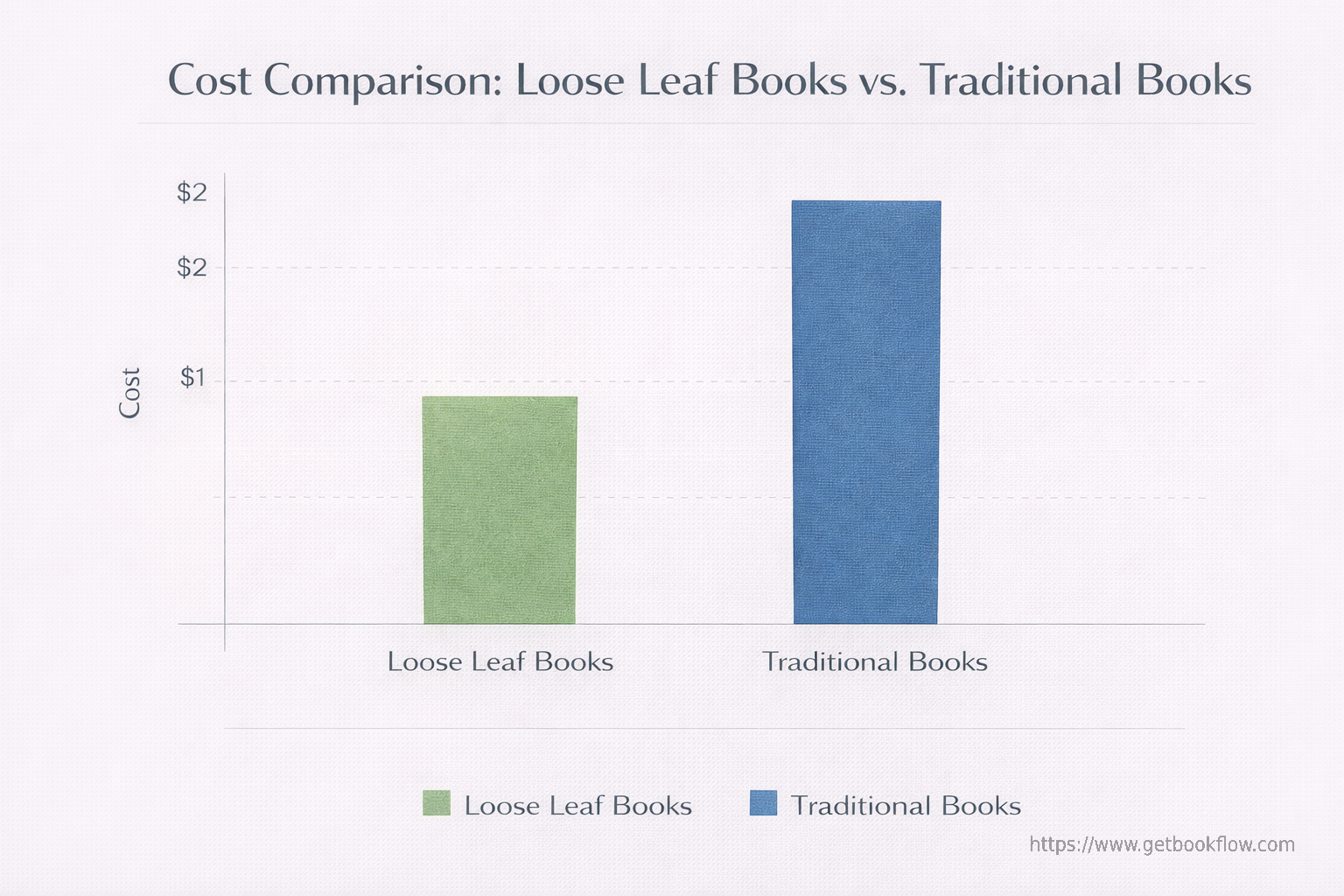
A study by the National Association of College Stores found that students can save up to 30% by using loose leaf books instead of traditional ones. When you consider that a standard loose leaf sheet may cost just 10 cents while a bound notebook can run upwards of $2 or more, the savings can add up quickly. Additionally, loose leaf books promote sustainability. You can print or write only the pages you need, reducing waste in comparison to traditional books where blank pages often remain unused. This not only benefits your wallet but also the planet.
In summary, the benefits of using loose leaf books extend well beyond their physical form. They offer flexibility in organization, the ability to adapt as your needs change, and a cost-effective, sustainable alternative to traditional bound books. Embracing this approach can enhance your creativity and make your writing experience more engaging and personalized.
Popular Uses for Loose Leaf Books
Loose leaf books are versatile tools that can cater to a variety of needs across different settings, making them an invaluable resource for many.
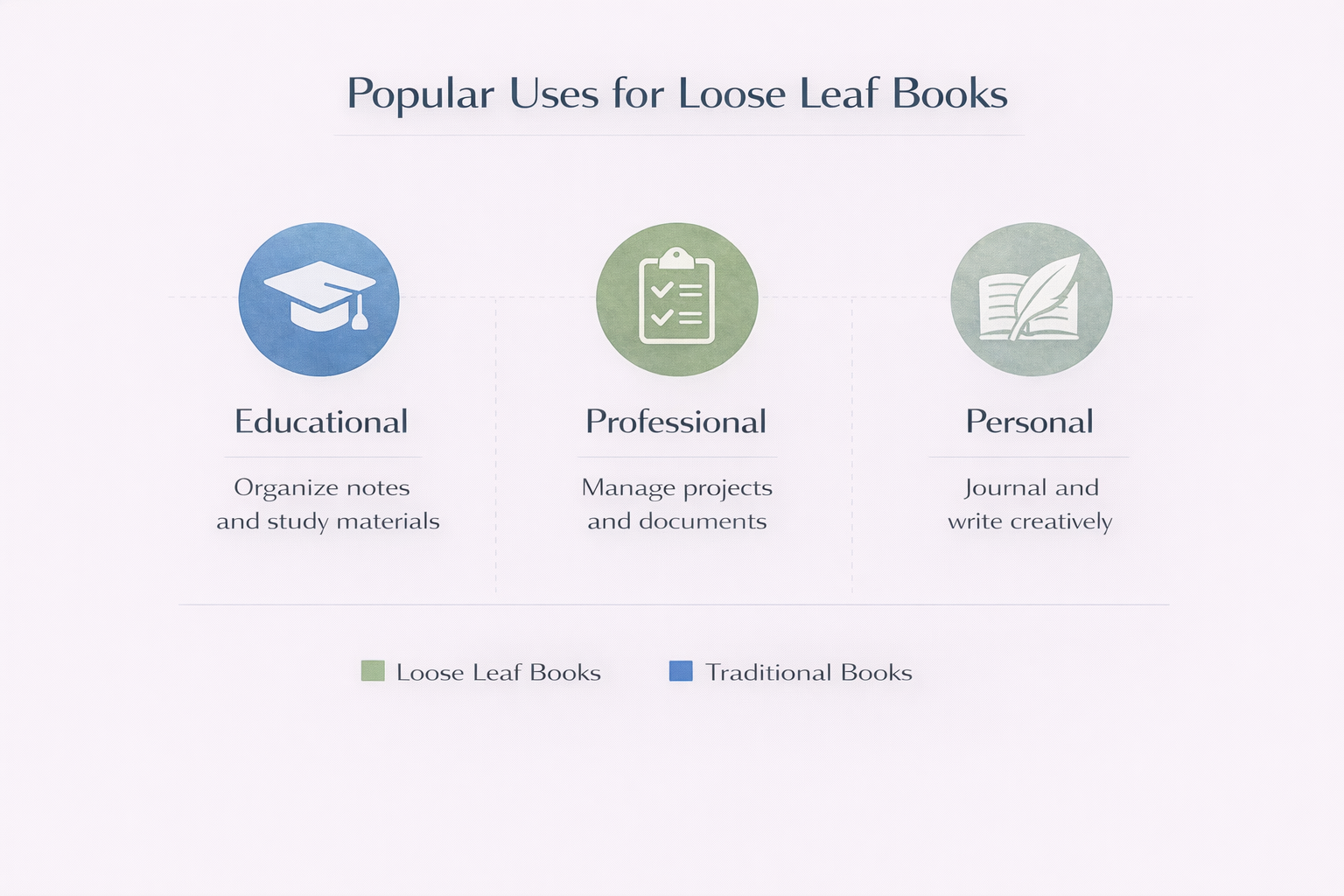
Whether in educational environments, professional scenarios, or personal projects, their adaptability shines through.
Educational Settings
In classrooms and libraries, loose leaf books are champions of organization. They allow students to easily take notes and keep study materials in order. For instance, a high school student might find that using a loose leaf book helps in separating notes by subject or even by unit, which can streamline study sessions. According to a study by the National Center for Education Statistics, nearly 90% of students believe that organized notes lead to better study habits and improved academic performance. This highlights just how beneficial it can be to have the ability to rearrange and customize your notes as needed.
Professional Applications
In the world of work, loose leaf books serve a crucial role in project management and documentation. Imagine a project manager who juggles multiple teams and timelines. By utilizing a loose leaf book, they can dedicate individual sections to different projects, allowing for easy reference and updates. This flexibility can be a game-changer in high-pressure work environments. A survey conducted by Project Management Institute found that over 70% of professionals believe that clear documentation significantly enhances team communication. Having a system that allows for easy organization, such as a loose leaf book, provides that clarity and connection for teams.
Personal Uses
On a personal level, loose leaf books are perfect companions for journaling and creative writing. They invite a sense of freedom and experimentation that traditional notebooks may not provide. For instance, a budding writer can jot down thoughts, poetry, and sketches in one place yet easily remove or rearrange pages as inspiration strikes. This ability to curate and customize one’s writing reflects a more personal touch, allowing creativity to flourish without constraints.
In essence, the uses for loose leaf books are as varied as the individuals who choose to use them. From students striving for academic excellence to professionals seeking organization, and from writers aiming to express themselves freely, these books indeed hold a special place in our personal and professional lives. This adaptability not only makes them practical but also deeply enriching, catering to the unique needs of each user.
Image here: [Detailed AI Prompt: Create a clean, professional infographic showing various uses of loose leaf books in different settings. Style: Modern, minimalist infographic style with clear labels and data. Colors: Professional palette (blues, greens, grays). Include: Clear title, axis labels, legend. Suitable for a blog post about: what is a loose leaf book]
How to Choose the Right Loose Leaf Book
When it comes to choosing the right loose leaf book, there are a few key factors to consider. First, think about the size. Loose leaf books come in various dimensions, from compact A5 options perfect for carrying around in a bag to larger A4 formats that provide ample space for extensive notes or creative projects. If you plan to use your book for taking notes in class, a smaller size might be more convenient. On the other hand, if you’re compiling research or writing a novel, a larger format will give you the room you need to spread out your thoughts.
Next, consider the paper quality. Not all papers are created equal, and the type you choose can significantly impact your writing experience. If you’re someone who enjoys using fountain pens or gel ink, opt for thicker, higher-quality paper that minimizes bleed-through and feathering. For instance, many users find that 80 gsm or higher paper provides an excellent writing surface without compromising on durability.
Lastly, think about the binder type. Loose leaf books typically come with various binder options, such as ring binders, disc binders, or spiral-bound formats. Each has its advantages. A ring binder allows for easy rearrangement of pages, which is great for organizing notes or projects. Meanwhile, a disc binder can also provide a sleek look while offering flexibility for adding or removing pages.
To organize your content effectively, consider using tabs or color-coded sections. This practical approach not only keeps your material tidy but also allows you to quickly access sections when you need them. For example, a student might use different colors for lecture notes, assignments, and personal reflections, making their study sessions more efficient and enjoyable.
In exploring what is a loose leaf book, it becomes clear that the right choice hinges on understanding your specific needs and preferences. With thoughtful selection, your loose leaf book can become a cherished tool for creativity and organization in your daily life.
Conclusion
In conclusion, a loose leaf book is more than just a collection of pages; it is a versatile companion that adapts to your unique needs and creative pursuits. From students organizing their lecture notes to professionals compiling project ideas, these books offer an unmatched flexibility that traditional bound notebooks simply cannot match. The ability to add, remove, and rearrange pages makes it easy to customize your book for any purpose.
Think about a time when you were juggling multiple tasks or projects. Perhaps you wanted to separate brainstorming ideas for a new business venture from personal reflections or notes from meetings. A loose leaf book allows you to do just that, bringing clarity and organization to your thoughts. You might even find yourself inspired by the freedom of being able to rearrange your pages, creating a flow that suits your thinking process.
If you haven't tried using a loose leaf book yet, I encourage you to consider giving it a go. Whether you’re a student, a busy professional, or simply someone who loves to jot down ideas, this tool can enhance your approach to note-taking and creativity. Your loose leaf book could become a cherished artifact of your journey, filled with insights, reflections, and treasured memories. So, embrace the versatility of a loose leaf book and discover how it can elevate your organization and creativity in delightful ways.