Psychology, at its core, is the study of the mind and behavior. It delves into the complexities of human thoughts, emotions, and actions, seeking to understand what drives us and how we relate to one another. From everyday interactions to the way we cope with stress, psychology helps us navigate our lives more effectively. With its roots in both science and the art of understanding, this discipline offers invaluable insights that can enhance our personal and professional relationships.
Understanding the fundamental rules of psychology is crucial, especially in our fast-paced world. These principles not only shape how we interpret our own behaviors but also influence how we engage with others. For instance, knowing that people tend to remember emotional experiences more vividly can help us craft messages in our work or even guide us in personal storytelling. This aspect of psychology plays a significant role in marketing, education, and even conflict resolution.
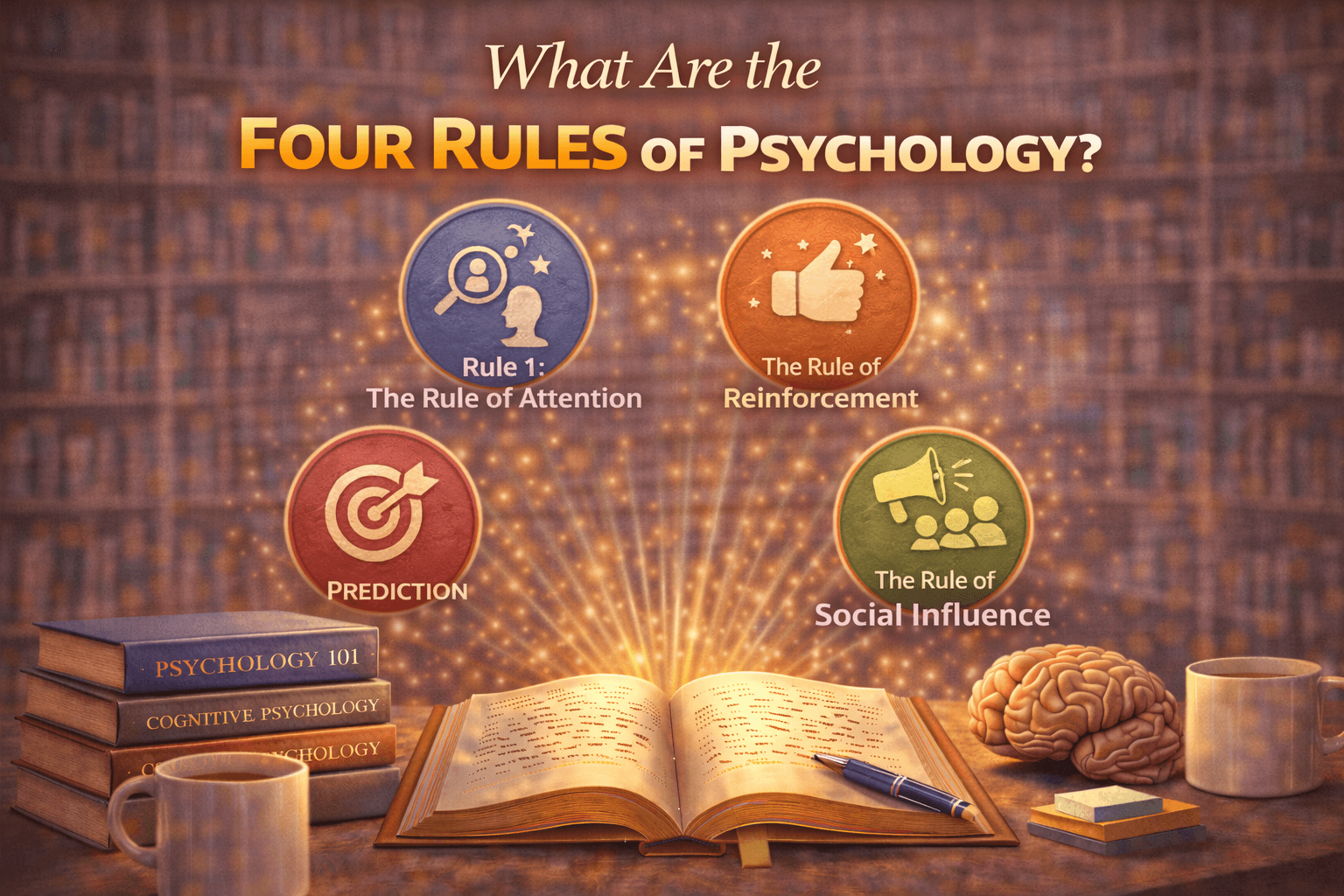
Many might wonder, “What are the four rules of psychology?” The answers to this question can be transformative, offering a framework to better understand ourselves and those around us. As we explore these foundational tenets, we will uncover how they apply to everyday life, empowering us to foster better connections and cultivate greater self-awareness. Each rule serves as a stepping stone toward deeper understanding, turning complex psychological concepts into practical tools we can all utilize.
Rule 1: The Rule of Attention
When we talk about the first rule of psychology, often referred to as the Rule of Attention, we dive into the fascinating influence that attention has on our perception and behavior. Simply put, what we focus on shapes how we interpret our experiences and, subsequently, how we react to them.
Consider a busy coffee shop. If you're engrossed in a book and only half-listening to the ambient chatter, your perception of the world around you is filtered through that singular focus. You might miss an interesting conversation happening just a table away or fail to notice the barista's quirky new hairstyle. This selective attention highlights how our minds prioritize certain stimuli over others, which can dramatically alter our understanding of social situations.
In everyday life, our attention is constantly being pulled in different directions. For example, picture a parent at a park, scanning the playground for their child. Their attention is laser-focused, filtering out other distractions like nearby conversations or the sound of laughter. This heightened awareness not only helps them keep their child safe but also enhances their emotional connection with that moment.
Research suggests that up to 50% of our daily activities consist of actions performed automatically, driven by habits formed through our focused attention. This means that, consciously or unconsciously, what we choose to focus on can have profound effects on our behavior and decision-making. In this way, the Rule of Attention not only answers the question, "What are the four rules of psychology?" but also encourages us to be mindful about where we direct our focus in life. By understanding this rule, we can cultivate a more intentional approach to our interactions and experiences.
Rule 2: The Rule of Reinforcement
The Rule of Reinforcement is a fascinating principle that highlights how our behaviors are shaped by the consequences that follow them. At its core, reinforcement can be divided into two categories: positive and negative. Understanding these can provide clarity on how we can encourage desirable behaviors in ourselves and others.
Positive reinforcement involves presenting a rewarding stimulus after a desired behavior occurs, which increases the likelihood of that behavior being repeated. For instance, think about a teacher who praises a student for completing their homework on time. That praise acts as a reward, encouraging the student to continue submitting their work promptly. It’s not just limited to academic settings; imagine a manager who recognizes an employee's hard work with a bonus. The employee is likely to maintain or even elevate their performance because they associate their effort with positive feedback.
On the flip side, negative reinforcement involves removing an unpleasant stimulus when a desired behavior occurs, which also encourages that behavior. For example, if a parent allows a child to skip chores for a week after they earn good grades, the child may be motivated to keep studying hard, hoping for the same freedom in the future. This doesn't mean that negative reinforcement is punitive; rather, it’s about alleviating discomfort or stress as a reward for positive behavior.
In essence, the Rule of Reinforcement showcases the power of consequences in shaping our actions. Whether through praise or the removal of stressors, understanding how reinforcement works can significantly impact our personal and professional lives, helping us to align our behaviors with our goals.
Rule 3: The Rule of Consistency
When it comes to understanding human behavior, the Rule of Consistency holds a prominent place among the four rules of psychology. This principle underscores the importance of maintaining consistent behavior and decision-making in our daily lives. Imagine a friend who frequently shifts their opinions or makes last-minute changes to plans; over time, you might begin to question their reliability. This inconsistency can create confusion and erode trust, not just in personal relationships but also in professional settings.
Research supports the power of consistency. A study published in the Journal of Personality and Social Psychology found that consistent behavior can enhance trustworthiness. In fact, participants who exhibited consistent responses were perceived as 70% more trustworthy than those who were inconsistent. This significant difference highlights how our actions can shape perceptions and relationships in profound ways.
Consider a manager who regularly provides feedback to their team. If the feedback is consistent, team members feel secure in their roles and expectations, leading to a more cohesive work environment. On the other hand, if feedback is sporadic or contradictory, it can result in confusion and disengagement.
In our daily interactions, striving for consistency not only strengthens our relationships but also fosters an environment where trust can flourish. When we align our words with our actions, we create a predictable atmosphere that enables deeper connections, whether in friendships, families, or workplaces. So, as you reflect on the four rules of psychology, remember the weight that consistency carries in shaping how we relate to others and ourselves.
Rule 4: The Rule of Social Influence
Social influence is a powerful force that can shape our choices in ways we might not even realize. Whether we are aware of it or not, the context in which we find ourselves often dictates our actions and decisions, making it a fundamental aspect of understanding human behavior. When we consider the question, "What are the four rules of psychology," it becomes clear that social influence plays a crucial role in how we interact with the world around us.
One particularly notable example comes from Solomon Asch’s conformity experiments in the 1950s. In these studies, participants were asked to match the length of a line to three comparison lines. When confederates (people who were in on the experiment) unanimously chose the wrong line, about 75% of participants conformed to the group's incorrect answer at least once, despite it being obviously wrong. This illustrates how our desire to fit in can lead us to make choices contrary to our better judgment.
Moreover, a survey conducted by the American Psychological Association found that nearly 90% of individuals reported changing their opinions on important issues based on the influence of their social circles. This statistic highlights just how significant social influence can be in shaping our viewpoints.
If we visualize this data with a line chart, we might see a clear trend showing a sharp increase in conformity as the number of individuals in the group rises. This demonstrates how our behavior is influenced not just by the people we engage with but also by the group dynamics at play.
By understanding the rule of social influence, we can become more mindful of our own choices and the subtle pressures that might be guiding them, ultimately leading to more intentional decision-making in our lives.
Conclusion
In wrapping up our exploration of what are the four rules of psychology, let’s take a moment to reflect on each aspect we’ve discussed. We’ve journeyed through the rule of social influence, recognizing how our behaviors often reflect those around us. This awareness can empower us to make more intentional choices, especially in group settings. Then we delved into the rule of reciprocity, an enlightening reminder of how acts of kindness can create a ripple effect. Picture a scenario where you help a colleague with a project, and in return, they support you when you need it most. It’s a powerful cycle of mutual benefit.
Next, we examined the rule of commitment, illustrating how our small initial commitments can lead to larger ones, shaping not only our actions but our identities. Think of how saying “yes” to a small task at work can lead to new opportunities and growth. Lastly, we touched upon the rule of authority, highlighting how we often look to experts for guidance. This is why mentorship plays such a crucial role in professional development.
As you reflect on these four rules, consider how you might apply them in both your personal and professional lives. Whether you’re navigating relationships, working in teams, or making decisions, these principles can serve as valuable tools for enhancing your interactions and fostering understanding. By integrating these insights, you can cultivate a more thoughtful approach to the way you engage with others and the world around you. Embrace these rules, and watch how they transform your connections and experiences.