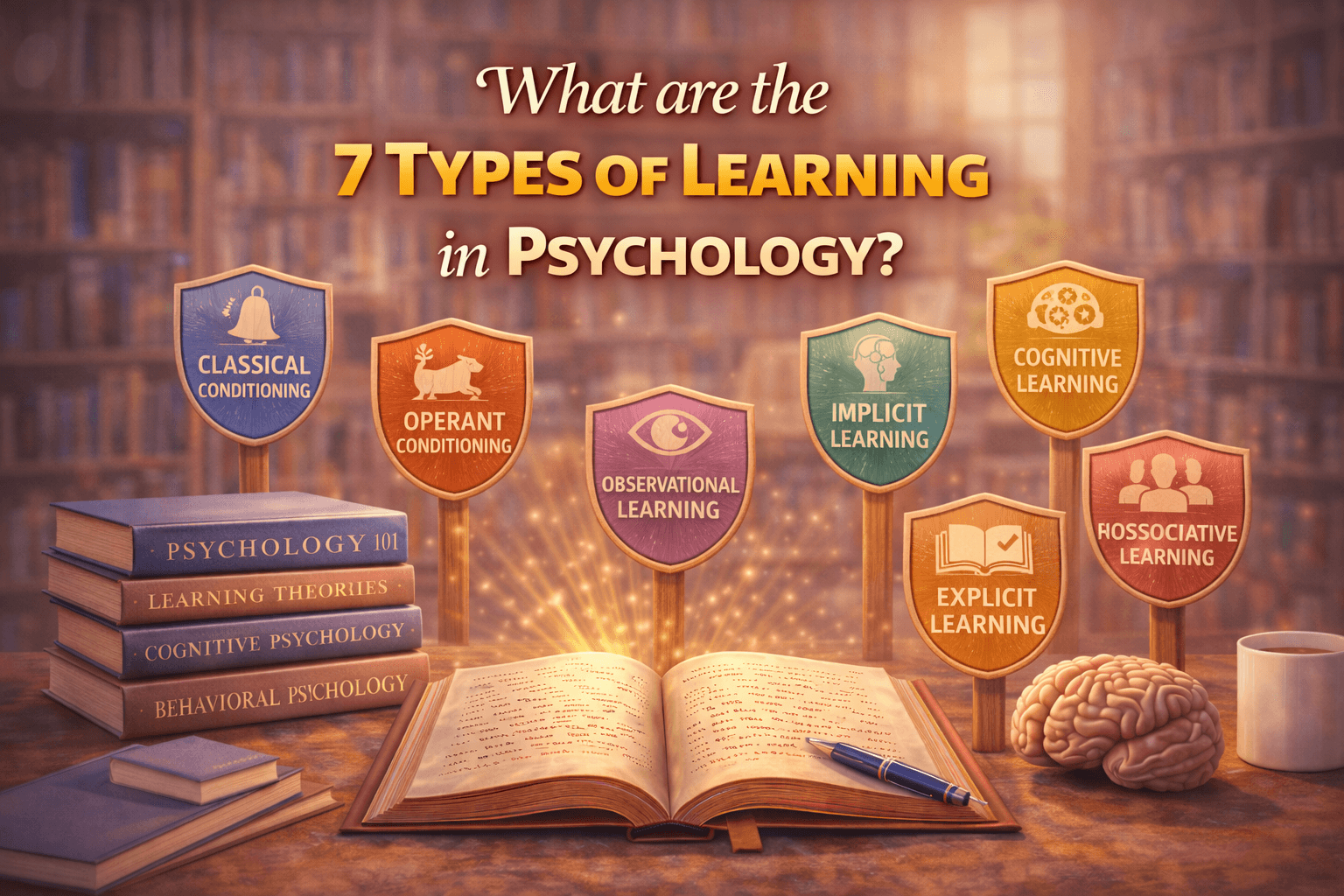
Learning, in the field of psychology, is often defined as a relatively permanent change in behavior or knowledge that results from experience. This transformation can take many forms, from acquiring new skills to altering existing behaviors. Imagine a child learning to ride a bicycle; initially, they may struggle with balance and coordination. However, through practice and encouragement, they gradually develop confidence and proficiency. This process beautifully illustrates how learning is not just a simple task but a complex journey that involves various strategies and approaches.
Understanding the different types of learning is crucial for several reasons. Each individual has a unique way of processing information and experiences, which can greatly influence their success in both academic and real-world situations. For instance, some people may thrive in a structured environment where they can follow specific guidelines, while others might benefit from hands-on experiences that allow them to explore and discover on their own.
By delving into "What are the 7 types of learning in psychology," we can gain valuable insight into these diverse approaches. Whether you are a student aiming to improve your study habits, a professional seeking to enhance your skills, or simply someone interested in understanding human behavior, recognizing these learning types can equip you with the tools to optimize both personal and educational growth. As we explore these different types, you'll see just how adaptable and fascinating the learning process can be.
1. Classical Conditioning
Classical conditioning is one of the fundamental concepts in psychology, illustrating how we can learn through association. At its core, it involves pairing a neutral stimulus with a stimulus that naturally elicits a response. Over time, the neutral stimulus begins to evoke the same response on its own. This might sound a bit abstract, so let’s break it down with a famous example from history.
The pioneering work of Ivan Pavlov, a Russian physiologist, beautifully showcases this concept. Pavlov was studying the digestive system of dogs when he noticed something curious: the dogs began to salivate not just when food was presented but also in response to the sound of a bell that preceded mealtime. This observation led him to conduct experiments where he would ring a bell just before presenting food to the dogs. After several repetitions, the dogs started to salivate simply at the sound of the bell, even when no food was present.
Pavlov's experiments highlighted how powerful associations can be. The dogs learned to connect the bell with the reward of food, demonstrating a significant principle of learning: behaviors can be conditioned through repeated experiences. This idea extends beyond the laboratory, influencing areas such as education, therapy, and even marketing, as we often make connections between stimuli in our everyday lives.
Understanding classical conditioning gives us a glimpse into one of the vital types of learning in psychology. It reveals not only how we form habits but also how our environment can shape our responses in ways we might not consciously recognize.
2. Operant Conditioning
Operant conditioning is another crucial principle in the realm of learning, building upon the foundation of classical conditioning. At its core, operant conditioning posits that behaviors can be modified through the use of reinforcement or punishment. This concept was famously developed by B.F. Skinner, a behavioral psychologist whose experiments with animals illustrated how consequences influence behavior.
In Skinner’s experiments, he used a device known as the Skinner Box, where a rat could press a lever to receive a food pellet. When the rat pressed the lever, it experienced a positive reinforcement, leading to an increased likelihood of that behavior being repeated. Conversely, if the rat received an unpleasant shock for pulling the lever, it would likely avoid that behavior in the future. This simple yet powerful idea, that our actions can be shaped by the rewards or consequences that follow, has wide-ranging applications in real life.
Consider a classroom setting, for instance. A teacher might use a system of rewards, such as praise or stickers, to encourage students to participate actively. When students feel appreciated, they are more likely to engage again in the future. This application of operant conditioning not only enhances learning but also fosters a positive environment.
As we explore "What are the 7 types of learning in psychology," operant conditioning stands out because it emphasizes the role of external factors in shaping our behavior. Whether we are aware of it or not, we are constantly navigating a world where our actions are influenced by the rewards and consequences we encounter, helping us learn and adapt every day.
3. Observational Learning
Observational learning, often referred to as social learning, is a fascinating process where individuals learn by watching others. This type of learning plays a significant role in how we acquire new behaviors, skills, and even attitudes without direct experience. We might not realize it, but much of what we learn comes from simply observing those around us, be it our peers, family members, or even public figures.
One of the most notable illustrations of observational learning comes from Albert Bandura’s classic Bobo doll experiment in the 1960s. In this study, children watched adults interact with an inflatable Bobo doll, either aggressively or calmly. After observing the adults, the children were given the opportunity to play with the same doll. Remarkably, those who had seen the aggressive behavior were more likely to imitate it, demonstrating that they had learned from watching. The experiment highlighted not just that children could learn new behaviors through observation, but also that they were more likely to mirror those behaviors if they saw them being rewarded.
This concept is particularly relevant in our daily lives. For example, children often imitate their parents' reactions to stress, whether that be calm problem-solving or frustration. Similarly, in workplaces, employees may adopt the attitudes and work ethics of their colleagues or supervisors, for better or worse.
As we continue to explore "What are the 7 types of learning in psychology," it’s clear that observational learning is not just about mimicking; it’s about understanding the nuances of social interactions and their impact on our behavior. By learning through observation, we become more adaptable and can navigate complex social environments with greater ease.
4. Experiential Learning
Experiential learning is a unique and dynamic approach that emphasizes the importance of direct experiences in the learning process. It posits that we learn best when we engage actively with our environment, reflect on our experiences, and apply what we have learned in real-world situations. This method is grounded in the idea that knowledge is constructed through experience, making it particularly impactful for those who thrive on hands-on learning.
One of the most influential models of experiential learning is Kolb's Learning Cycle. Developed by David Kolb, this cycle consists of four key stages: concrete experience, reflective observation, abstract conceptualization, and active experimentation. Let’s break those down a bit.
First, we begin with concrete experience, where the learner directly engages in an activity. For example, imagine a student participating in a biology lab. Instead of merely reading about cellular processes, they are observing cells under a microscope. This hands-on experience paves the way for the next stage, reflective observation, where the student takes time to think critically about what they observed, asking questions like, “What did I notice?” or “What surprised me?”
From there, they move to abstract conceptualization, where learners develop theories based on their reflections. In our biology lab example, the student might connect their observations to broader concepts about cell structure and function. Finally, we arrive at active experimentation. Here, the student tests out their new understanding, perhaps by designing an experiment to explore cellular processes further.
By engaging in this cycle, learners can deepen their understanding and retention of knowledge. Experiential learning not only makes the learning process enjoyable but also equips individuals with skills they can apply beyond the classroom or workplace.
In the context of exploring “What are the 7 types of learning in psychology,” experiential learning stands out as a powerful method that fosters engagement and personal growth. Whether in a classroom, at work, or in everyday life, embracing experiences as learning opportunities can lead to profound insights and lasting change.
5. Social Learning
Social learning is a fascinating and essential type of learning in psychology that emphasizes the power of social interactions. At its core, social learning involves acquiring new behaviors and knowledge through observing and interacting with others. This concept, pioneered by psychologist Albert Bandura, showcases just how influential our social environment can be in shaping our understanding of the world.
Think about a moment when you learned something simply by watching someone else. Perhaps you observed a colleague master a new software program or a friend expertly navigate a challenging recipe. In these instances, you absorbed information not through direct instruction, but by watching others succeed or struggle. This observational learning can be particularly effective because it allows you to see the nuances of behavior and practice without the risk of making mistakes yourself.
Social interactions play a pivotal role in this learning process. When we engage with peers, mentors, or even family members, we're not just sharing information; we’re also building a community that fosters growth and understanding. For instance, in a classroom setting, students often learn better when they collaborate and share insights with one another. Research suggests that students who participate in group discussions retain information more effectively than those who study alone.
In essence, social learning highlights how interconnected we are in our educational journeys. By recognizing the importance of our social networks, we can harness the power of observation and interaction to enhance our own learning experiences, making it a vital piece of the puzzle when considering “What are the 7 types of learning in psychology.”
6. Cognitive Learning
Cognitive learning is a fascinating process that focuses on understanding how we acquire, process, and store knowledge. Unlike other types of learning, which may emphasize direct experiences or behaviors, cognitive learning highlights the mental activities that take place when we learn. It encompasses various strategies we use to comprehend information, such as organizing, analyzing, and synthesizing it.
One of the most significant connections within cognitive learning is its relationship to memory. For instance, when you learn a new language, you don't just memorize vocabulary; you also create mental frameworks to understand grammar and syntax. This process of connecting new knowledge to existing knowledge is essential for long-term retention. According to a study by the American Psychological Association, individuals who employ cognitive strategies, like summarizing information or creating mind maps, can improve their recall by up to 30%.
Problem-solving is another critical aspect of cognitive learning. Think about the last time you faced a challenging math problem. You probably engaged in various cognitive processes, such as breaking the problem down into manageable parts or looking for patterns. This holistic approach enables learners to tackle complex issues systematically.
In essence, cognitive learning equips us with the tools to understand not just the "what" of knowledge but also the "how" and "why." It's about making connections between concepts and using those connections to navigate challenges in our everyday lives, which is why understanding cognitive learning is essential in exploring what makes up the diverse landscape of learning.
7. Constructivist Learning
Constructivist learning is a fascinating approach that emphasizes the learner's active role in constructing their own understanding and knowledge of the world. Rather than simply receiving information passively from a teacher, students engage in hands-on experiences that allow them to explore, question, and reflect. This process helps them develop a deeper, more personal grasp of the material.
One of the core principles of constructivist learning is the importance of active engagement. For instance, consider a science class where students are not just reading about ecosystems but are actually visiting a local forest. There, they observe the interactions between plants and animals firsthand. They might collect samples, ask questions, and even create presentations on their findings. This real-world application of knowledge not only enhances their understanding but also fosters a sense of curiosity and excitement about learning.
Research supports the effectiveness of this approach. A study published in the Journal of Educational Psychology found that students who engaged in constructivist learning demonstrated significantly higher retention rates and deeper comprehension compared to those who learned through traditional methods.
Ultimately, constructivist learning aligns beautifully with the broader inquiry of what makes up the seven types of learning in psychology. It reminds us that learning is not just about memorization, but about making meaningful connections and applying knowledge in practical ways. By fostering an environment where students can interact with their world, we empower them to become lifelong learners, equipped with the skills needed to navigate an ever-changing landscape.
Conclusion
In conclusion, understanding the seven types of learning in psychology: classical conditioning, operant conditioning, observational learning, experiential learning, constructivist learning, self-directed learning, and transformative learning, offers us valuable insights into how we absorb and process information. Each type highlights different pathways through which we can grow and develop as learners.
For instance, consider a child learning to ride a bicycle. Initially, they may rely on observational learning, watching their parents or friends. As they practice, they experience operant conditioning through positive reinforcement, such as encouragement from loved ones. This holistic approach illustrates how multiple learning types can intertwine, leading to a richer understanding of the task at hand.
As you reflect on these diverse learning styles, I encourage you to explore your personal learning preferences. Are you someone who thrives in hands-on environments, or do you find that you learn best through structured instruction? Perhaps you resonate most with self-directed learning, eagerly seeking out knowledge on topics that ignite your passion.
By recognizing your unique learning style, you can tailor your educational experiences to enhance engagement and retention. So, as you ponder, "What are the 7 types of learning in psychology," remember that embracing your individual journey is a key step towards becoming a more effective learner in both professional and personal realms. The world is filled with opportunities for growth, and understanding these learning types is a wonderful place to start.