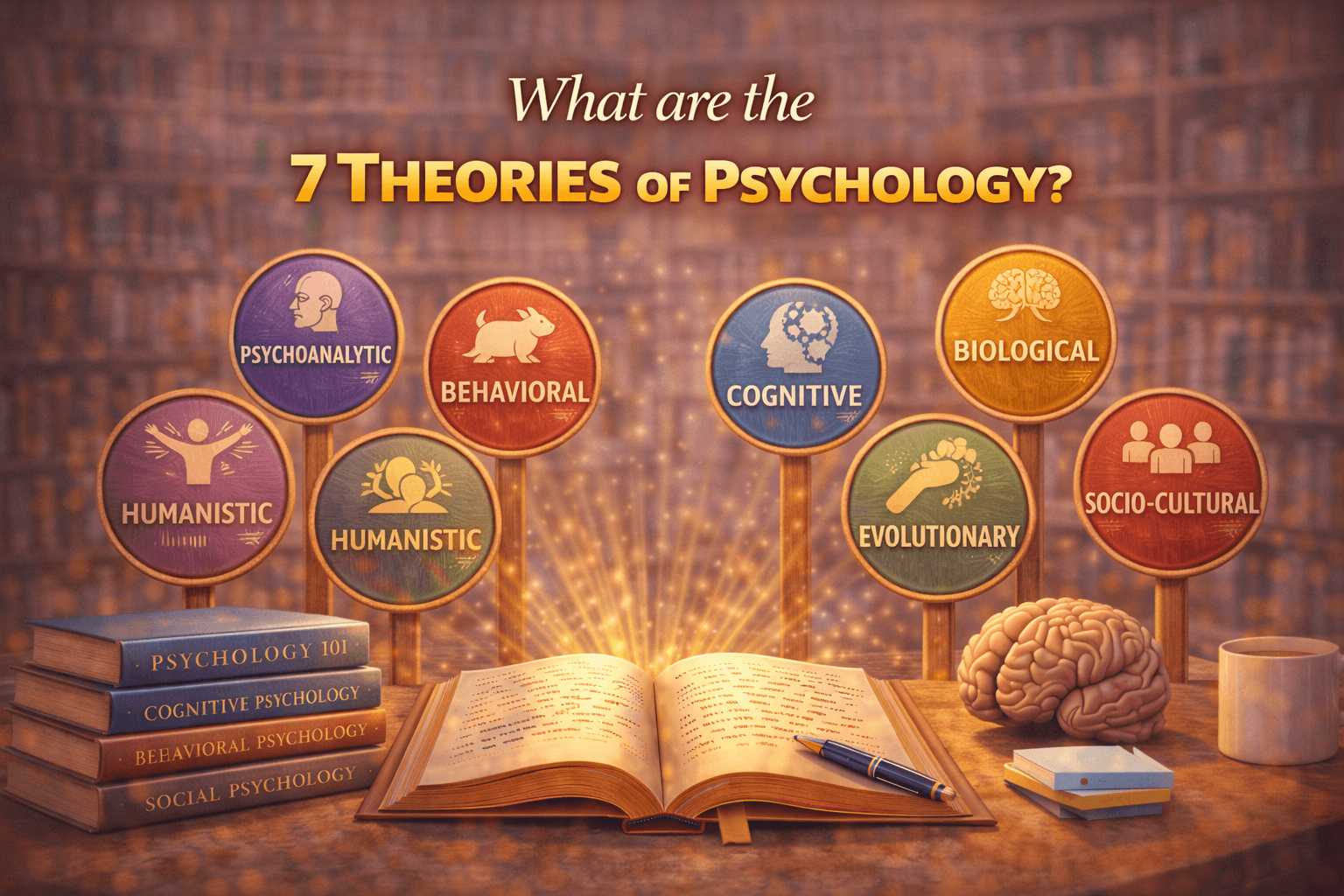
Psychology is a fascinating field that delves into the intricacies of the human mind and behavior. From how we think and feel to the ways we interact with one another, psychology helps us understand ourselves and our relationships in profound ways. It is a discipline that bridges science and art, enabling us to explore the nuances of emotions and thoughts while grounding those explorations in empirical research and theory.
As we navigate the complexities of life, whether as students, professionals, or simply as individuals striving for personal growth, it becomes increasingly important to grasp the different theories that underpin psychological practices. Each theory offers a unique lens through which we can study and interpret human behavior, and understanding these perspectives can significantly enhance our comprehension of ourselves and others.
For instance, consider how cognitive psychology might explain why someone struggles with decision-making during stressful times. By understanding cognitive processes, we can gain insight into the reasons behind our choices and potentially improve our decision-making skills. With so many theories to ponder, you may find yourself asking, "What are the 7 theories of psychology?" This question opens the door to a broader conversation about how these frameworks inform not only academic study but also our everyday lives, relationships, and personal development. As we explore these theories further, we will uncover valuable insights that can enrich our understanding of ourselves and the world around us.
Behaviorism
Behaviorism, a prominent school of thought in psychology, focuses on observable behaviors rather than internal mental states. This theory suggests that all behaviors are acquired through conditioning, which means that our responses to environmental stimuli shape our actions. Originating in the early 20th century, behaviorism responded to the limitations of introspective methods that were popular before its emergence. John B. Watson, often regarded as the father of behaviorism, famously asserted that psychology should be a science grounded in observable phenomena. He argued that if psychology were to earn its place alongside the natural sciences, it needed to focus exclusively on behavior that could be measured and quantified.
B.F. Skinner later expanded on Watson's ideas, introducing operant conditioning. Skinner demonstrated that behaviors could be modified through reinforcement or punishment. Through experiments with rats and pigeons, he showed that when a behavior is reinforced, it is more likely to be repeated. For instance, when a rat pressed a lever and received food as a reward, it learned to press that lever more frequently. This principle has vast implications not only in psychology but also in various fields such as education and therapy.
In education, behaviorism has transformed teaching strategies. For example, many teachers employ positive reinforcement to encourage students to engage in productive behaviors. Imagine a classroom where students earn points for completing homework or participating in discussions. This system fosters a motivating environment where students learn that their efforts yield tangible rewards, enhancing their academic performance.
In therapy, behaviorist techniques are used effectively to address various challenges, such as phobias or addiction. Cognitive-behavioral therapy (CBT), a popular therapeutic approach, combines behaviorism with cognitive principles. It helps individuals identify negative thought patterns that influence their behaviors and teaches them healthier ways to respond to these thoughts.
Through its emphasis on observable behavior and conditioning, behaviorism provides a framework that helps us understand not just the "what" but also the "how" of our actions. It highlights the power of our environment in shaping behaviors and offers practical strategies for promoting positive change in our lives. As we reflect on "What are the 7 theories of psychology?" behaviorism serves as a vital piece of the puzzle, demonstrating the intricate dance between our actions and the world around us.
Cognitive Psychology
Cognitive psychology focuses on the intricate processes that govern how we think, learn, remember, and solve problems. At its core, it examines the mental functions that influence our behavior. Imagine your brain as a complex computer, processing data, making calculations, and producing outputs based on the inputs it receives. This perspective allows us to understand the "why" behind our actions, adding depth to our exploration of "What are the 7 theories of psychology?"
One of the key figures in cognitive psychology is Jean Piaget, a Swiss psychologist known for his pioneering work on the development of children's thinking. Piaget studied how children acquire knowledge, proposing that they move through distinct stages of cognitive development, each characterized by different ways of understanding the world. For instance, during the sensorimotor stage, infants learn about their surroundings through their senses and actions. This insight not only informs education but also highlights the importance of cognitive growth across the lifespan.
In today's digital age, cognitive psychology finds interesting intersections with technology and artificial intelligence. As machine learning and AI systems become increasingly sophisticated, they mimic certain human cognitive processes. For example, algorithms used in natural language processing can analyze and interpret human speech in ways that resemble our own understanding. This connection raises intriguing questions about the nature of intelligence, both human and artificial.
According to a recent survey, approximately 56% of professionals believe that understanding cognitive psychology can enhance workplace productivity. This statistic emphasizes the practical applications of cognitive principles, from improving learning strategies in educational settings to optimizing user experience in technology design.
As we explore cognitive psychology, we uncover the rich tapestry of our mental processes. Understanding how we think not only deepens our self-awareness but also equips us to navigate the complexities of modern life, paving the way for more thoughtful interactions with both people and technology. Whether you’re a student seeking to improve your study habits or a professional aiming to enhance team collaboration, insights from cognitive psychology can illuminate a path forward.
Psychoanalytic Theory
Psychoanalytic theory, often credited to the pioneering work of Sigmund Freud, is an intriguing lens through which we can explore the complexities of human behavior. Freud’s journey began in the late 19th century, a time when the inner workings of the mind were largely a mystery. He proposed that much of our behavior is influenced by the unconscious mind, a reservoir of thoughts, memories, and desires that lie beneath our conscious awareness. This idea resonated deeply and laid the groundwork for a new approach to understanding psychological phenomena.
One of the most compelling aspects of Freud’s theory is the concept of defense mechanisms, strategies our minds employ to protect us from anxiety and emotional pain. For example, consider a person who fails a critical exam. Instead of confronting their feelings of inadequacy, they might resort to rationalization, convincing themselves that the test was unfair or irrelevant. This defense mechanism can provide temporary relief but often prevents individuals from addressing underlying issues and learning from their experiences.
However, psychoanalytic theory has not been without its critiques. Many argue that Freud’s ideas are difficult to test scientifically, making it challenging to validate his claims. For instance, his emphasis on sexual and aggressive instincts as primary motivators of human behavior has sparked significant debate. Additionally, his theories often lack consideration of cultural and social factors that can also shape an individual's psyche.
In recent years, psychoanalytic theory has evolved and adapted. Modern psychodynamic therapy, for instance, draws on Freudian principles while incorporating contemporary understanding of psychology. It emphasizes the importance of interpersonal relationships and the impact of childhood experiences on adult behavior, acknowledging that our past often shapes our present. Therapists today might explore how unresolved conflicts or repressed emotions influence a client's current relationships and choices, providing a more nuanced understanding of mental health.
As we delve deeper into the question, "What are the 7 theories of psychology," it becomes clear that psychoanalytic theory remains a foundational pillar. It invites us to examine not just our outward behaviors but also the intricate web of internal processes that drive us. Whether you’re navigating personal challenges or simply curious about the human experience, exploring the depths of the unconscious can be a fascinating journey into understanding ourselves and others.
Humanistic Psychology
Humanistic psychology offers a refreshing perspective in the realm of psychological theories, emphasizing personal growth and self-actualization. This approach celebrates the inherent potential of individuals to lead fulfilling lives, focusing on the qualities that make us uniquely human. Central to this movement are two influential figures: Carl Rogers and Abraham Maslow.
Carl Rogers introduced the concept of unconditional positive regard, a fundamental principle in therapy. He believed that for individuals to thrive, they need an environment that fosters acceptance and understanding, where they feel valued just as they are. Imagine sitting in a therapy session, sharing your deepest fears, and feeling completely accepted without judgment. That nurturing space can be transformative, allowing individuals to explore their true selves and engage in meaningful personal development.
Abraham Maslow, on the other hand, is best known for his Hierarchy of Needs, a framework that outlines the stages of human motivation. At the base of this pyramid are our most basic physiological needs, such as food and shelter. As we ascend through the levels, we encounter safety needs, love and belonging, esteem, and finally, self-actualization at the top. A remarkable statistic to highlight the importance of reaching that pinnacle is that research suggests only about 2% of people actually achieve self-actualization in their lifetime. This illustrates just how challenging yet rewarding it can be to realize our full potential.
In therapy, these concepts are applied in various ways, from encouraging clients to develop self-awareness to helping them navigate relationships. For instance, a therapist might work with a client to identify their unmet needs, which could lead to breakthroughs in their personal and professional lives. By focusing on strengths and possibilities, rather than just problems, humanistic psychology aligns closely with personal development approaches, empowering individuals to take charge of their narratives and pursue their dreams.
Ultimately, humanistic psychology invites us to look inward, nurturing our growth and striving towards our best selves. As you reflect on "What are the 7 theories of psychology," consider how this compassionate framework encourages us to embrace our potential and pursue a life that resonates with our true essence.
Social Psychology
Social psychology is a fascinating lens through which we can explore the intricate dance of human interaction. At its core, it studies how individuals influence and are influenced by others, uncovering the subtle dynamics that shape our behaviors, beliefs, and emotions. As we delve into the world of social influence, it becomes clear that we are not just solitary beings; we are social creatures deeply interconnected with one another.
One of the key concepts in social psychology is group dynamics. This refers to the way people interact within groups and how those interactions affect individual behavior. Think about a time when you were in a group setting, perhaps during a team project at work or a group project in school. Did you notice how the opinions of others could sway your own? This is a classic example of conformity, where individuals adjust their behaviors or beliefs to align with the group consensus, even if it contradicts their original stance.
A compelling illustration of this phenomenon is the famous Asch conformity experiments conducted in the 1950s. In these studies, participants were asked to judge the length of lines while surrounded by confederates (people who were in on the experiment). Surprisingly, many participants went along with the incorrect answers given by the confederates, highlighting the power of group pressure. About 75% of participants conformed at least once, demonstrating how easily our perceptions can be influenced by those around us.
Real-life examples of social influence abound, from the way fashion trends spread through social media to how public opinion can shift in the wake of social movements. Consider the recent wave of environmental activism, where individuals rally together to demand action on climate change. The collective voices of passionate advocates can inspire others to join in, creating a ripple effect that amplifies the call for change. This is social psychology in action, people influencing each other to take a stand for a common cause.
Understanding social psychology enriches our grasp of human behavior and relationships. It sheds light on the delicate balance between individuality and conformity, encouraging us to reflect on our roles within our communities. As you contemplate "What are the 7 theories of psychology," take a moment to appreciate how social psychology helps decipher the norms and influences that guide our social lives, reminding us that we are all part of a larger tapestry of human experience.
Biopsychology
Biopsychology represents a fascinating intersection between biology and psychology, illuminating how our physical bodies are intertwined with our mental processes. At its core, this branch of psychology examines how our genetic makeup, brain chemistry, and overall physiological state influence our thoughts, emotions, and behaviors.
Imagine a bustling city, with each street representing a different aspect of our biology and psychology. Just as traffic patterns can impact the flow of a city, our brain's neurotransmitters and hormones can significantly affect our mood and behavior. Take serotonin, for example. Often referred to as the “feel-good” neurotransmitter, it plays a pivotal role in regulating mood. Research has shown that individuals with lower levels of serotonin are more prone to depression and anxiety. This connection underscores the importance of understanding the biological underpinnings of our mental health.
Genetics also plays a vital role in biopsychology. Studies suggest that genetic factors can account for about 30-60% of the variance in the risk for developing mental health disorders, such as schizophrenia and bipolar disorder. For instance, if someone has a family history of depression, they may be more susceptible to experiencing similar challenges themselves. This doesn't mean that our fate is sealed by our genes; environmental factors and personal experiences also significantly contribute to our mental health landscape.
As we explore the implications of biopsychology in mental health treatment, it becomes clear that a more integrated approach is necessary. Traditional therapies often focus solely on psychological aspects, but incorporating biological insights can lead to more effective outcomes. For example, an individual battling depression might benefit from a combination of cognitive behavioral therapy (CBT) and medication that addresses serotonin levels. This holistic approach acknowledges that mental health is not merely a product of our thoughts, but rather a complex interplay of our biology and psychology.
In summary, as you delve deeper into "What are the 7 theories of psychology," remember that biopsychology offers a compelling lens through which to understand our behavior. By recognizing the profound influence of our biological makeup, we open the door to more comprehensive mental health treatments, ultimately paving the way to a brighter, healthier future.
Evolutionary Psychology
Understanding behavior through the lens of evolutionary theory offers a fascinating perspective on human psychology. At its core, evolutionary psychology posits that many of our psychological traits and behaviors have developed as adaptations to our environment over thousands of years. This theory suggests that just as physical traits evolve to enhance survival, so too do our mental processes.
Take, for example, the instinct for social bonding. Our ancestors thrived in groups, and forming close-knit social connections increased their chances of survival. This has led to the development of psychological traits such as empathy and cooperation. In modern times, these traits manifest in our relationships, motivating us to help others and build communities. When you think about it, our desire for connection is not merely a cultural phenomenon but rather a deeply rooted survival mechanism.
Another striking example is the concept of fear. Evolutionary psychology explains our instinctive reactions to danger, such as the fight-or-flight response. Early humans faced numerous threats, from predators to environmental hazards. Those who learned to react quickly to danger were more likely to survive and pass on their genes. Thus, the heightened state of alertness many experience during stressful situations can be traced back to these evolutionary needs.
However, the field is not without its debates and criticisms. Some argue that evolutionary psychology tends to oversimplify complex behaviors by attributing them solely to our evolutionary past. Critics often point out that this approach can lead to deterministic thinking, suggesting that our behaviors are fixed and unchangeable. Furthermore, the reliance on speculation about ancient human life raises questions about the validity of some theories. For instance, how do we account for cultural variations in behavior that don’t align with evolutionary predictions?
Despite these criticisms, evolutionary psychology remains an essential part of the conversation around human behavior. It encourages us to consider not just how we think and feel today, but also the historical context that has shaped our psychological landscape. As you explore "What are the 7 theories of psychology," keep in mind that the insights offered by evolutionary psychology can deepen our understanding of ourselves and the complex web of influences that guide our behaviors. By integrating this perspective, we can appreciate the intricate tapestry of our psychological traits, shaped by both nature and nurture.
Conclusion
As we wrap up our exploration of "What are the 7 theories of psychology," it’s clear that each of these theories, behaviorism, cognitive psychology, humanistic psychology, psychodynamic theory, evolutionary psychology, biological psychology, and social psychology, offers a unique lens through which we can understand human behavior.
Behaviorism, for instance, emphasizes observable actions and the influence of the environment. This helps explain why habits form and how they can be changed through reinforcement. On the other hand, cognitive psychology dives into the processes of thought, illustrating how our mental frameworks shape our perception of reality. Humanistic psychology reminds us of the importance of personal growth and self-actualization, emphasizing that we all have the capacity for change and improvement.
Psychodynamic theory takes us into the depths of our unconscious, revealing how past experiences shape our current behaviors and relationships. Meanwhile, evolutionary psychology provides a fascinating perspective on why certain traits have persisted through generations, linking our modern behaviors back to survival instincts. Biological psychology grounds us in the physiological aspects of our mental processes, showing how our brains and bodies influence our thoughts and feelings. Finally, social psychology highlights the impact of our social environment, reminding us that our interactions and cultural contexts play pivotal roles in shaping who we are.
Understanding these theories is not merely an academic pursuit; it allows us to appreciate the multifaceted nature of human psychology. Integrating these perspectives helps create a more holistic understanding of ourselves and others. Imagine approaching a challenge at work or in your personal life with insights from both cognitive and social psychology. You might recognize that your thinking patterns are influenced by the dynamics within your team, enriching your problem-solving approach.
If you’re feeling inspired to delve deeper into the fascinating world of psychology, I encourage you to explore these theories further. Whether it’s through reading books, attending lectures, or engaging in discussions, there’s a wealth of knowledge waiting for you. Each theory opens a door to a different aspect of the human experience, offering tools to navigate the complexities of life.
Ultimately, psychology is about understanding ourselves and our interactions with the world. By embracing these diverse theories, you not only equip yourself with valuable insights but also join a community of learners striving to understand what makes us human. So go ahead, take that next step into the captivating realm of psychology. The journey promises to be enlightening and transformative.