Psychology, at its core, is the study of the mind and behavior. It delves into the reasons behind our actions, thoughts, and emotions. Whether you find yourself pondering why we react a certain way in stressful situations or curious about the motivations driving our everyday decisions, psychology offers insightful frameworks for understanding these complexities. In a world that often feels overwhelming, grasping the underlying mechanisms of human behavior can empower us to navigate our lives with greater awareness and intention.
One way to approach these myriad questions is through the lens of psychological perspectives. These perspectives serve as distinct yet interconnected frameworks that help psychologists and researchers analyze human behavior from various angles. Think of them as different filters through which we can examine our thoughts, feelings, and actions. Just as an artist may use different brushes and colors to create a rich tapestry, psychologists draw from these perspectives to gain a more comprehensive understanding of the human experience.
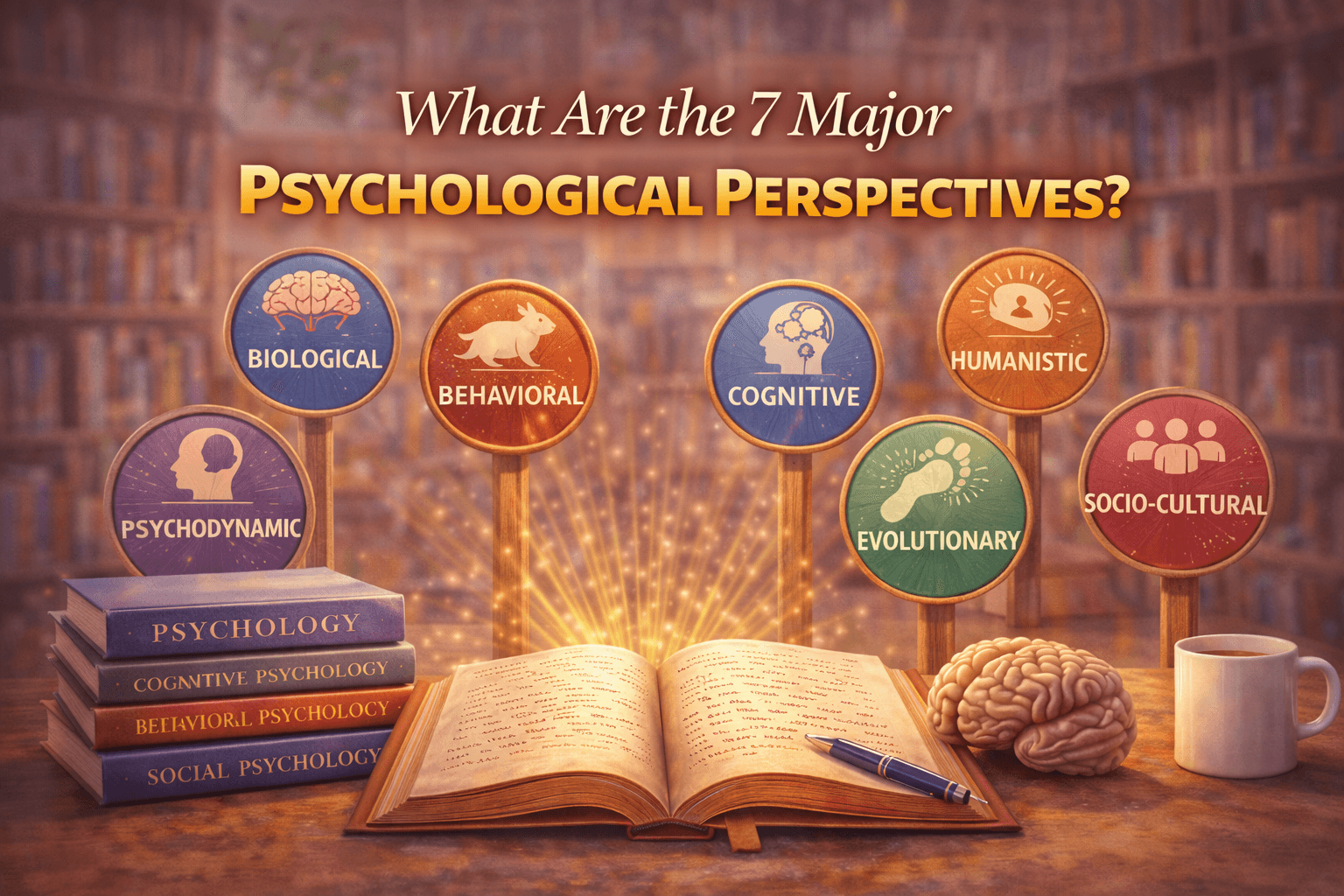
When considering "What are the 7 major psychological perspectives," you are embarking on a journey that will reveal the diverse ways in which we can interpret our behaviors and emotions. Each perspective, whether it's behaviorism, cognitive psychology, or humanistic psychology, offers unique insights, allowing us to appreciate the complexity of human life. By exploring these perspectives, we can not only learn more about ourselves but also enhance our connections with others in a meaningful way.
1. Biological Perspective
The biological perspective is one of the foundational viewpoints in psychology, emphasizing how our physical bodies shape our behaviors and mental processes. At its core, this perspective examines the physiological bases of behavior, suggesting that our actions, thoughts, and emotions are often influenced by biological factors such as genetics, brain structure, and neurochemistry.
For instance, let’s consider the role of genetics. Research has shown that certain psychological traits, such as temperament and susceptibility to mental health disorders, can be inherited from our parents. A classic example is the study of twins, which has revealed that identical twins often exhibit striking similarities in personality and behavior, even when raised apart. This highlights how our genetic makeup can play a significant role in who we are.
Brain structure also significantly impacts behavior. For example, the amygdala, a small almond-shaped cluster of neurons deep within the brain, is crucial for processing emotions like fear and pleasure. Individuals with damage to this area may struggle to recognize fear in others, demonstrating how physical changes in the brain can alter emotional responses and social interactions.
In summary, understanding the biological perspective sheds light on the intricate interplay between our physiology and psychology. As we explore "What are the 7 major psychological perspectives," appreciating how our biology influences our behavior deepens our understanding of ourselves and others, fostering compassion and connection in our daily lives.
2. Behavioral Perspective
The behavioral perspective is a fascinating lens through which we can understand human behavior. This approach emphasizes observable actions and the ways in which we learn through conditioning. Instead of delving into the complexities of thoughts and emotions, behavioral psychologists focus on what we can see and measure. This might sound simple, but it opens up a world of insights into how we interact with our environments and each other.
Key figures like B.F. Skinner and John Watson played pivotal roles in shaping this perspective. Watson famously declared that for psychology to be a true science, it must study only what can be observed. This belief led him to conduct groundbreaking experiments, such as the Little Albert study, which demonstrated how fear can be conditioned in children. In this study, a baby was exposed to a white rat while also hearing a loud noise. Eventually, the child began to fear the rat, highlighting how fear responses can be learned rather than innate.
B.F. Skinner further expanded on these ideas with his work on operant conditioning. He believed that behaviors could be shaped and modified through rewards and punishments. For instance, consider a classroom setting where students receive praise for completing their homework on time, encouraging them to continue this positive behavior. Through consistent reinforcement, the likelihood of the desired behavior occurring again increases.
By focusing on observable behaviors, the behavioral perspective provides practical strategies for change. This insight is invaluable for educators, parents, and anyone looking to understand how behaviors can be shaped. As we continue exploring "What are the 7 major psychological perspectives," the behavioral approach reminds us that our actions often speak louder than words, helping us to create environments that foster positive learning and growth.
3. Cognitive Perspective
The cognitive perspective is a fascinating approach that delves into the intricate workings of the human mind. It emphasizes the importance of mental processes such as perception, memory, and problem-solving. By understanding how we think, we can better grasp the connection between our thoughts and behaviors.
Consider a student preparing for an exam. The way they perceive the material can significantly influence their performance. If they believe they can master the content, they are more likely to engage in effective study strategies. Conversely, a student who feels overwhelmed may struggle to focus, leading to anxiety and poorer outcomes. This highlights how cognitive processes shape not only our actions but also our emotional responses.
Memories also play a crucial role in the cognitive perspective. Our recollections guide our decisions and shape our identity. For instance, think about someone reflecting on their childhood experiences. Those memories can affect their current relationships and how they approach challenges. Positive memories may inspire confidence, while negative ones could lead to hesitation or fear.
Problem-solving is another vital aspect of cognition. When faced with a challenge, such as a complex work project, our ability to evaluate different solutions relies heavily on our cognitive framework. The strategies we employ are influenced by past experiences and the mental shortcuts we’ve developed over time.
By exploring the cognitive perspective, we gain insights into how our thought patterns influence our behaviors, ultimately enriching our understanding of "What are the 7 major psychological perspectives." It's a reminder that the mind is a powerful tool, one that shapes not only our actions but also our entire experience of life.
4. Humanistic Perspective
The humanistic perspective offers a refreshing lens through which we can examine the complexities of human behavior. Unlike other psychological approaches that may focus on pathology or the mechanics of thought, this perspective emphasizes individual potential and personal growth. It invites us to view the person as a whole, celebrating the unique qualities each individual brings to the table.
At the forefront of this perspective are influential figures like Carl Rogers and Abraham Maslow. Rogers introduced the idea of unconditional positive regard, suggesting that individuals thrive when they feel accepted and valued for who they are, without conditions or judgments. Imagine a student struggling in school, feeling overwhelmed and inadequate. If a teacher provides support and encouragement, emphasizing the student’s effort and potential rather than just grades, it can spark a transformation. This nurturing environment can help the student find their own path to growth and self-discovery.
Abraham Maslow, on the other hand, is best known for his hierarchy of needs, which illustrates the stages of human motivation. At the base lie basic physiological needs, while at the top sits self-actualization, the realization of personal potential. For instance, consider an entrepreneur who starts with the basic need for financial stability. As their business grows, they may find themselves driven by a desire to innovate and create meaningful change in the world. This journey toward self-actualization is a testament to the humanistic perspective, showcasing how individuals can pursue their passions and realize their full potential.
In summary, the humanistic perspective serves as a reminder that we all have the capacity for growth and change. It encourages us to look beyond challenges and focus on what we can become, inviting us to reflect on our own journeys as we explore the broader question of "What are the 7 major psychological perspectives?"
5. Psychodynamic Perspective
The psychodynamic perspective delves into the intricacies of the unconscious mind, highlighting the vital role early childhood experiences play in shaping our adult behaviors and emotions. This approach is deeply rooted in the work of Sigmund Freud, a pioneering figure who believed that our unconscious thoughts and feelings significantly influence our actions, often in ways we're not consciously aware of.
Freud introduced concepts such as the id, ego, and superego, which represent different aspects of our psyche. For instance, imagine a scenario where a person feels a strong aversion to public speaking. According to the psychodynamic perspective, this fear might stem from a childhood experience, such as being criticized or embarrassed during a school presentation. In this way, the unresolved feelings from that early experience could manifest as anxiety in adulthood, illustrating how our past can shape our present.
Freud also emphasized the importance of dreams and free association as tools for uncovering hidden thoughts. Picture sitting in a therapist's office, sharing seemingly random thoughts that might lead to breakthroughs about your emotions. This process can often reveal underlying conflicts or traumas that have been buried deep within the unconscious.
As we explore “What are the 7 major psychological perspectives,” it becomes clear that the psychodynamic perspective invites us to look beyond surface behaviors and consider the deeper motivations that drive us. It encourages a journey of self-discovery, fostering a greater understanding of ourselves and our relationships with others.
6. Evolutionary Perspective
The evolutionary perspective on psychology offers a fascinating lens through which we can understand human behavior. By examining how our ancestors adapted to their environments, we gain insight into the traits that have been passed down and shaped who we are today. This perspective emphasizes the role of natural selection in developing behaviors that enhance survival and reproduction.
Consider the importance of adaptive behaviors. For example, the instinct to form social bonds has been vital for survival. Humans are inherently social creatures, and those who formed strong alliances were better able to navigate challenges, such as finding food or defending against predators. A study revealed that social ties can increase the likelihood of survival by up to 50% in various species. This illustrates how deeply rooted these behaviors are in our evolutionary past.
Moreover, a bar graph showcasing common adaptive traits across species could highlight how traits like cooperation, altruism, and even aggression have evolved differently depending on environmental pressures. For instance, animals that live in groups, like wolves or elephants, exhibit behaviors that promote group cohesion, demonstrating how these traits have emerged as advantageous for survival.
In exploring “What are the 7 major psychological perspectives,” the evolutionary viewpoint invites us to reflect on how our behaviors and motivations are not just shaped by personal experiences but also by the enduring legacy of our species. Understanding this perspective helps us appreciate the intricacies of human behavior while acknowledging the survival strategies that continue to influence us today.
7. Sociocultural Perspective
When we delve into the sociocultural perspective, we begin to see how our thoughts and behaviors are profoundly influenced by the society and culture we inhabit. This perspective invites us to explore the intricate web of social norms and cultural values that shape who we are.
For instance, consider how community expectations can dictate everything from our career choices to our views on mental health. In many cultures, seeking help for mental health issues is still stigmatized, leading individuals to suffer in silence rather than reach out for support. According to the World Health Organization, it is estimated that 79% of people with mental health conditions in low- and middle-income countries do not receive the treatment they need. This statistic vividly illustrates how cultural attitudes can create barriers to mental wellness.
Let’s think about a personal anecdote. Imagine a young woman named Amina, who grew up in a tightly-knit community where the pressure to conform to traditional roles was immense. When she began to experience anxiety, she found it difficult to talk about her feelings, fearing judgment from those around her. This example highlights not just the cultural values at play, but also the impact of social norms on individual behavior.
By examining the sociocultural perspective, we can better understand how diverse backgrounds contribute to varying emotional responses and coping mechanisms. It's an essential lens when we seek to answer the question, “What are the 7 major psychological perspectives?” Ultimately, it reminds us that understanding human behavior requires a holistic view, one that appreciates the influence of society and culture on mental health and well-being.
Conclusion
As we reach the end of our exploration into the question, "What are the 7 major psychological perspectives," it's clear that each perspective offers a unique lens through which we can understand human behavior. We’ve journeyed through the biological, behavioral, cognitive, humanistic, psychodynamic, sociocultural, and evolutionary perspectives. Each of these frameworks not only sheds light on the complexity of our minds but also highlights the interconnectedness of various factors that shape our thoughts, emotions, and actions.
For instance, consider the cognitive perspective, which emphasizes how our thoughts influence our behaviors. This can resonate deeply with anyone who has experienced the power of positive thinking, or perhaps the struggle with negative self-talk. On the other hand, the sociocultural perspective reminds us that our environment and cultural context play a significant role in shaping our experiences. Think about how different cultural backgrounds can influence everything from parenting styles to coping strategies during tough times.
I encourage you to delve deeper into each of these perspectives. Whether you're a student of psychology, a professional seeking to enhance your understanding of human behavior, or simply a curious reader, there's so much to gain from exploring these theories further. Each perspective can provide valuable insights that enrich not only your knowledge but also your interactions with others. By appreciating these diverse viewpoints, you can develop a more nuanced understanding of yourself and those around you, ultimately fostering empathy and connection in an increasingly complex world.